Big City Life
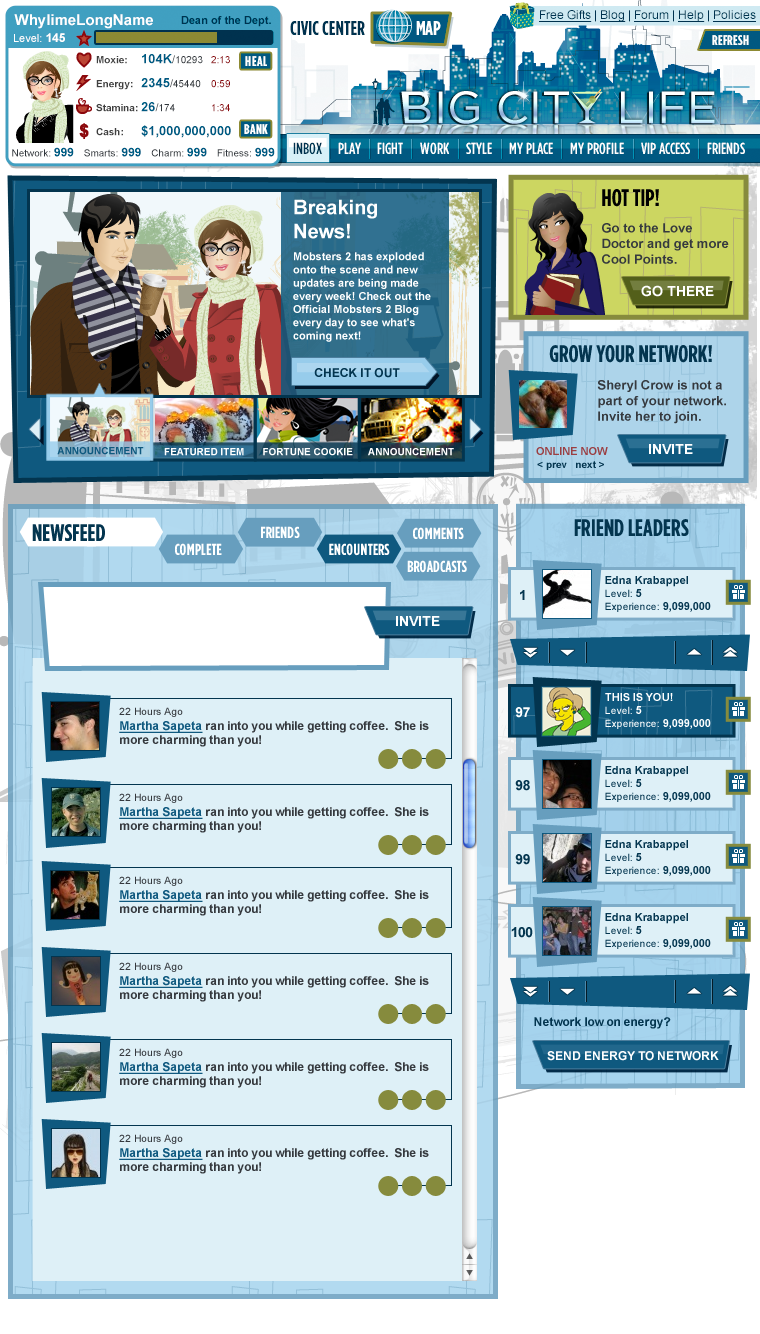
Life after college — a social RPG for the Facebook generation.
Big City Life was the spiritual sequel to Sorority Life, the game I'd redesigned when I first joined the company. Where Sorority Life put players in college, Big City Life picked up where that left off — players could advance their careers, make friends, go on dates, get an apartment, and eventually find love in the big city.
The premise was aspirational and social: the game let players craft the post-college life they wanted, progressing through career milestones and social relationships in parallel. The visual style needed to feel cosmopolitan and contemporary — a step up from the campus aesthetic of its predecessor.
Sole designer — responsible for everything UI/UX, end to end.
I was the only designer on the team for Big City Life. That meant owning the full range of design work: layout and interaction flows, the visual look and feel, wireframing all major features with producers and game designers, concepting the visual style with the lead artists, creating assets for the entire game, and working closely with engineers to implement everything.
Being the sole designer on a project this size was both a challenge and an opportunity. There was no design handoff — every decision from wireframe to shipped pixel was mine to make and defend. It accelerated my ability to work across the full product design stack and gave me a comprehensive view of what it takes to ship a game UI end to end.
From wireframe to final — seeing every screen through.
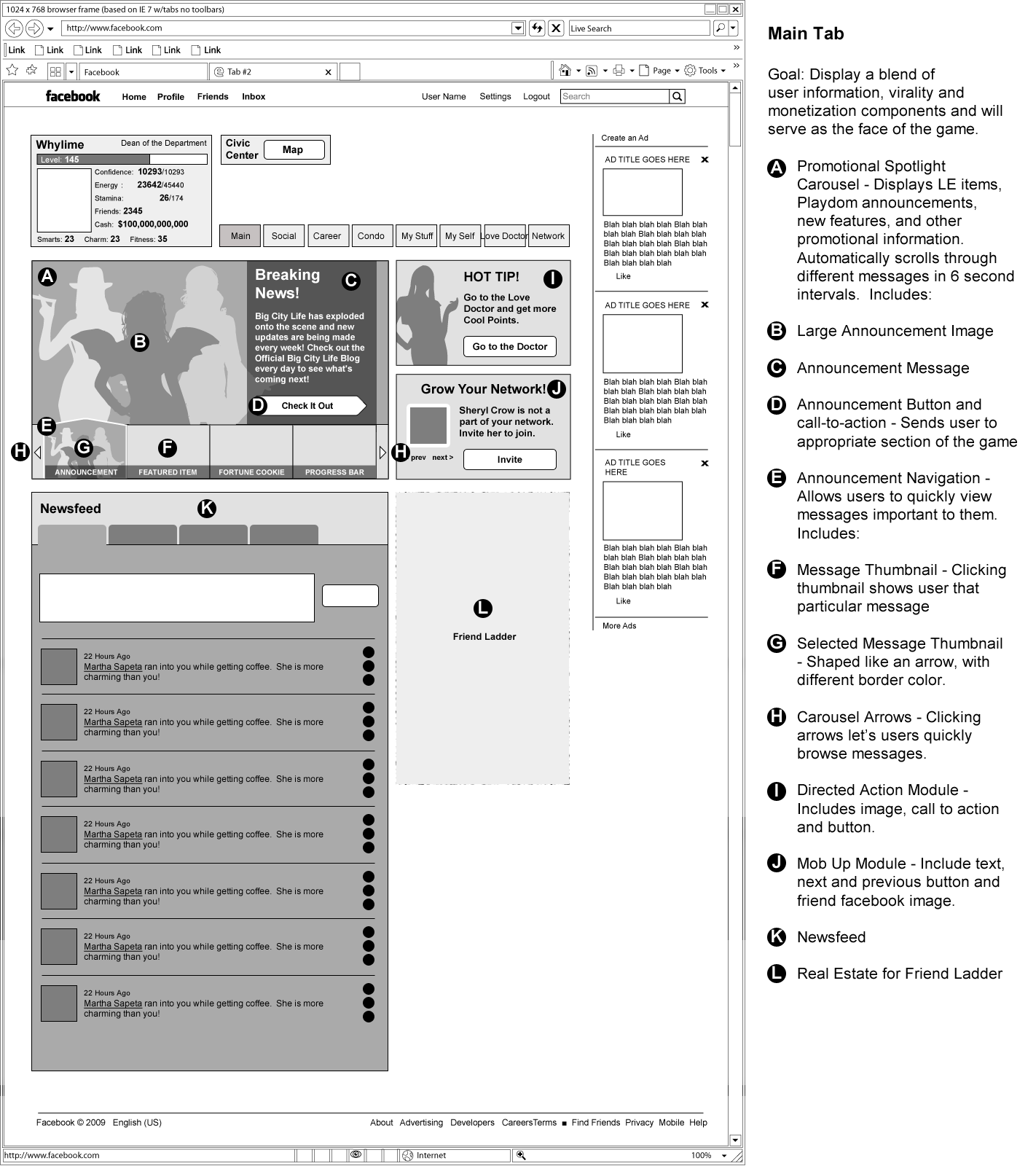
Because I owned both UX and UI, I could move from wireframe to high-fidelity in tight loops without translation loss. The home screen wireframe established the core layout and navigation hierarchy; the final visual built the city aesthetic on top of that structure without compromising the interaction model.
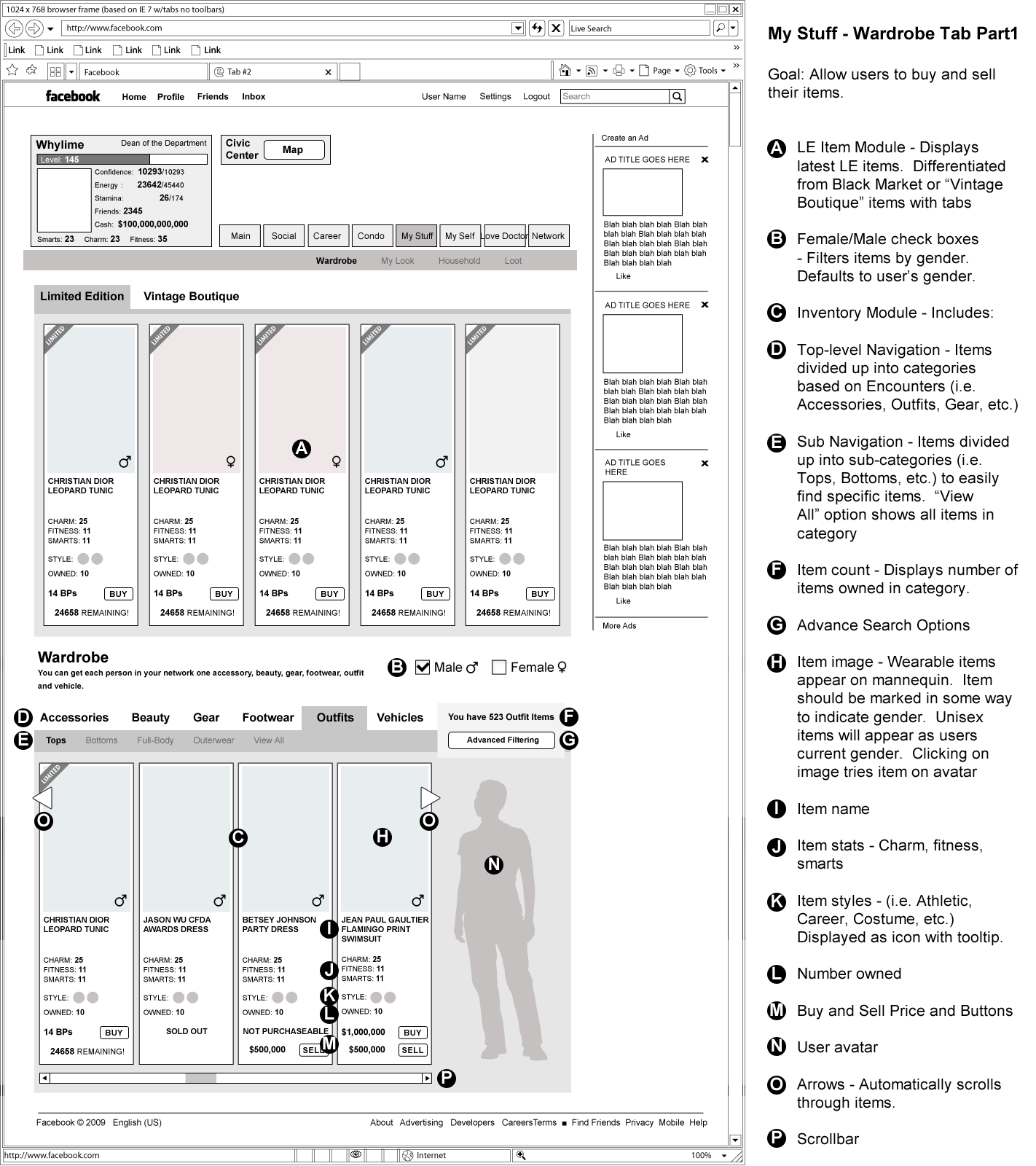
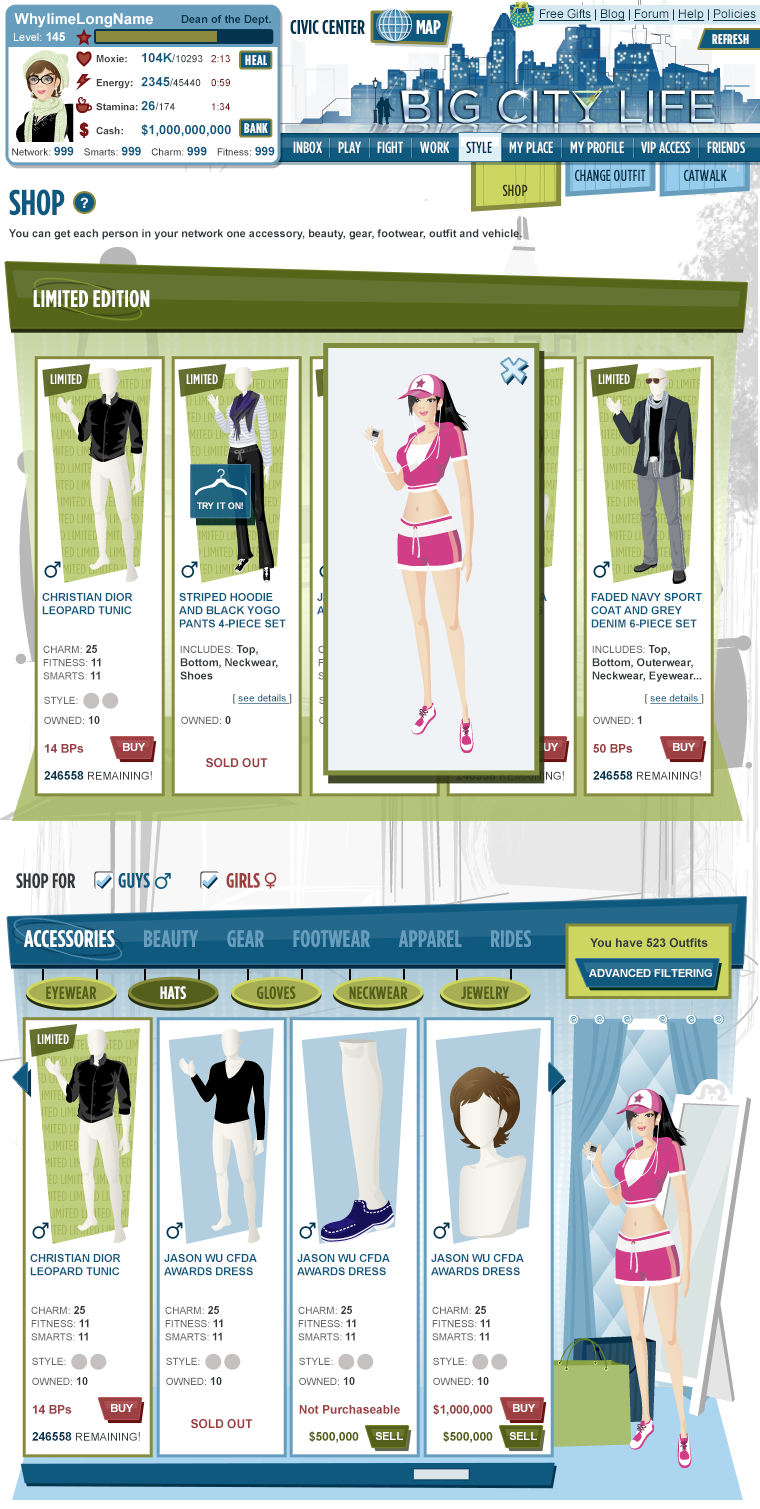
Building out the full city experience.
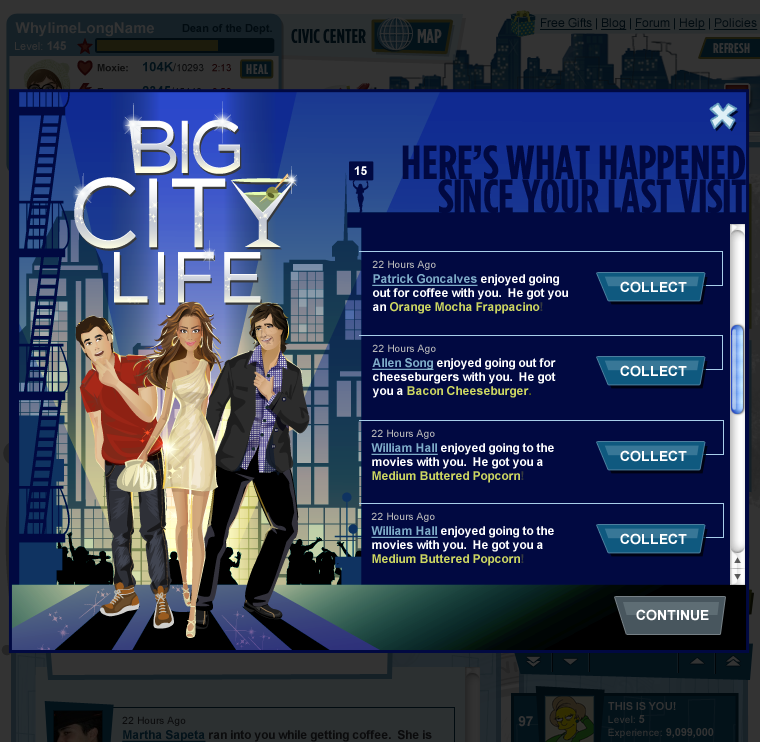
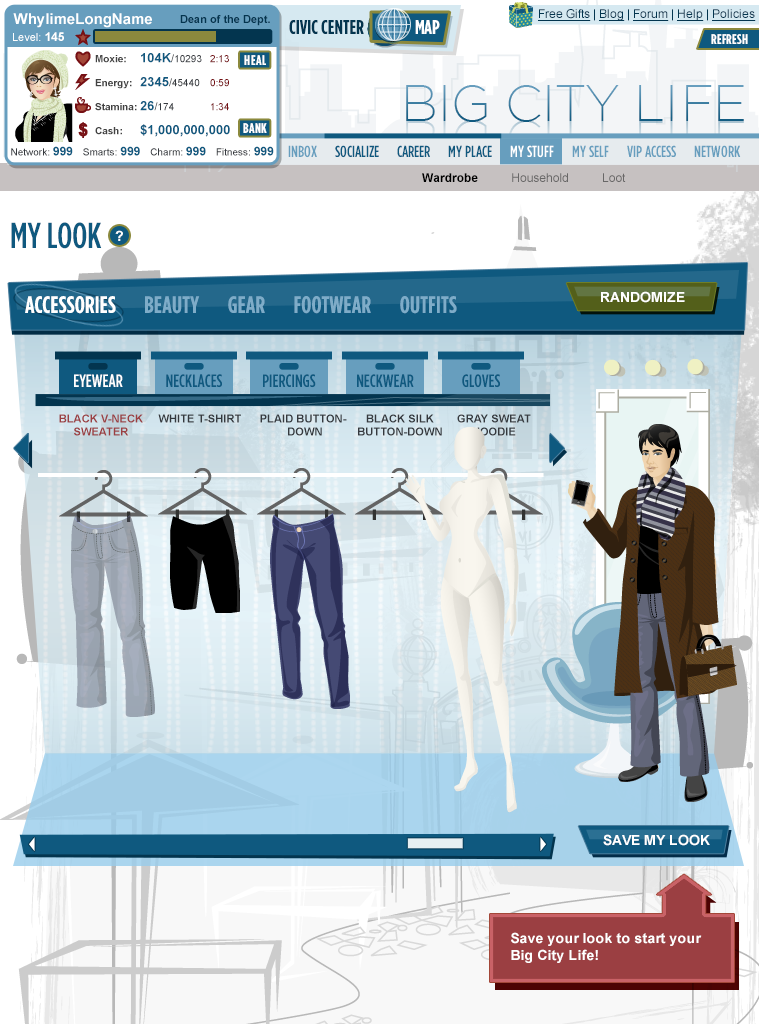
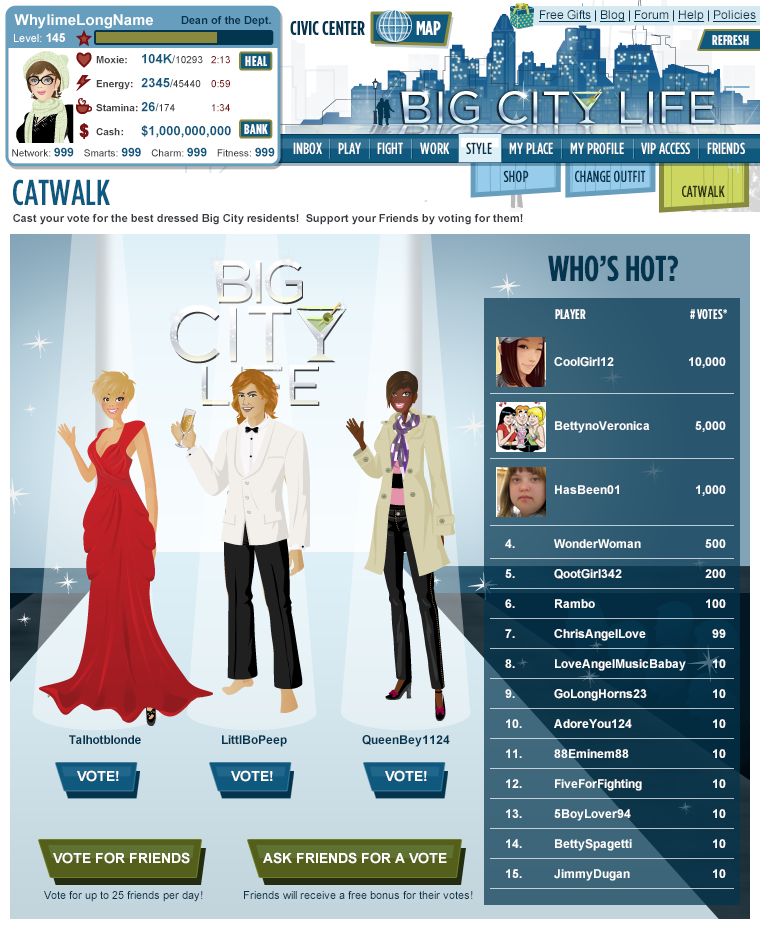
Beyond the home screen, Big City Life needed a full suite of social and RPG screens — messaging between players, wardrobe and inventory management, a catwalk feature for showing off your look, and a "My Stuff" hub for managing your city life progress. Each screen had to feel cohesive while serving a distinct purpose in the player's journey.
Being the sole designer on Big City Life meant there was no one else to catch what I missed — which made me more rigorous and more decisive. I learned to trust my own judgment at every level of the design, from layout logic to the color of a button. It was the project that made me understand what it actually means to own a design, not just contribute to one.