Botkin's Hidden Cove
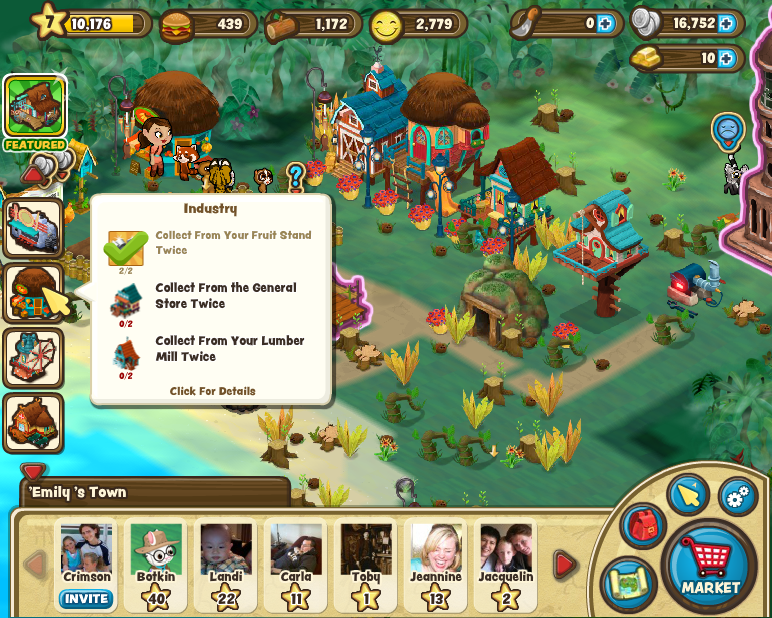
The successor to Gnome Town — and a game that pivoted three times.
Botkin's Hidden Cove launched in May 2012 as the follow-up to Gnome Town, following Botkin — the beloved bunny from that game — as he explored the mysteries of a tropical island. Players helped Botkin solve mysteries, unlock new locations, and save the animals of Hidden Cove from the Evil Witch Doctor.
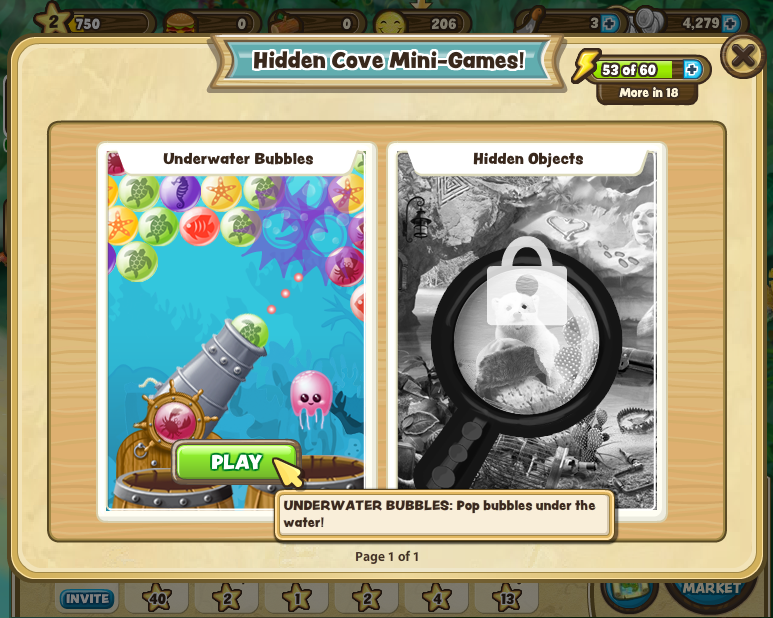
What made Hidden Cove unusual was how much it evolved during its lifetime. It launched as a city builder with an added hidden object game feature. It then pivoted to a builder-only model. Then to a bubble saga format. Each iteration required a meaningful design overhaul, and the UI/UX team had to adapt quickly while keeping the experience coherent for existing players.
Leading the UI/UX team through every pivot.
I led the UI/UX team through the full lifetime of the project. The team was responsible for wireframing all features and flows, creating the visual assets of the user interface, and implementing everything in Flash. As UI/UX Lead, I shaped the direction of each major redesign while collaborating closely with other UI designers and artists on execution.
Managing a game through multiple pivots in a short window was one of the most intense design challenges of my career. Each pivot required reassessing what the game was, what players expected, and how the UI needed to change to support the new direction — all while maintaining continuity with the existing audience.
Building the island world from the ground up.
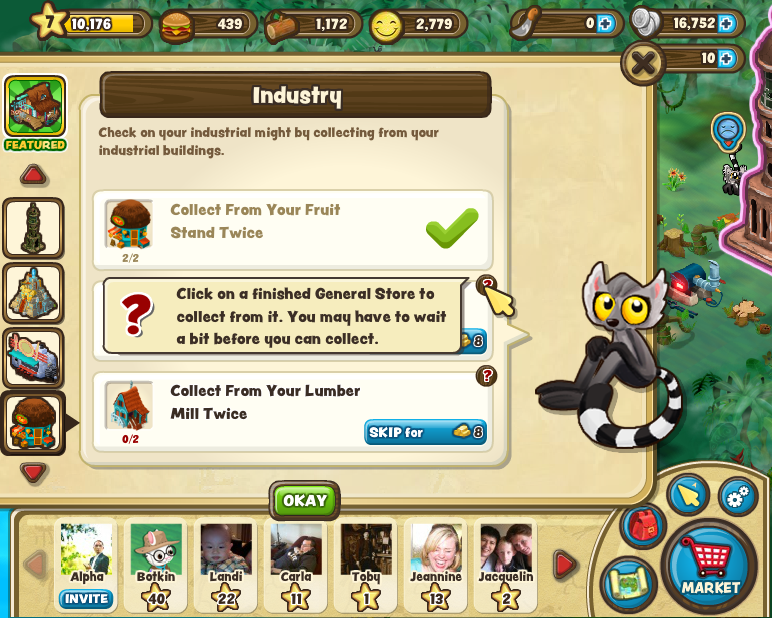
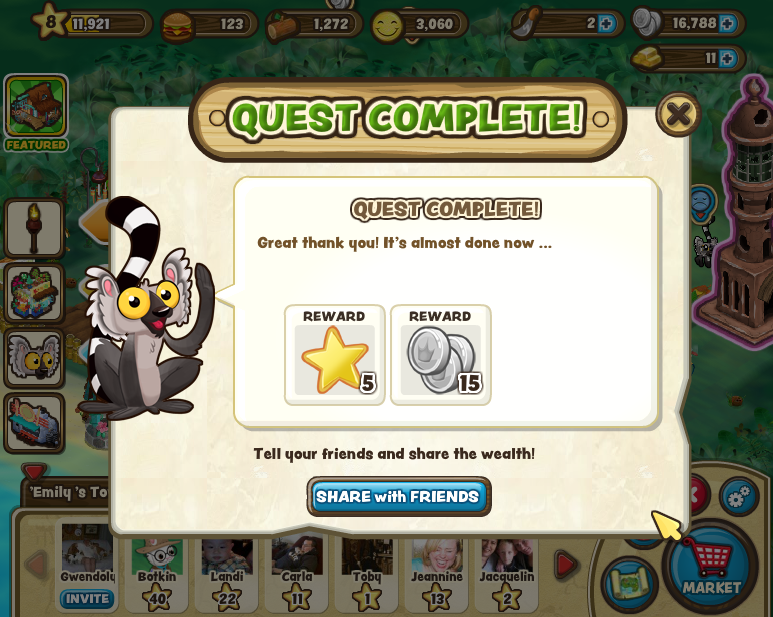
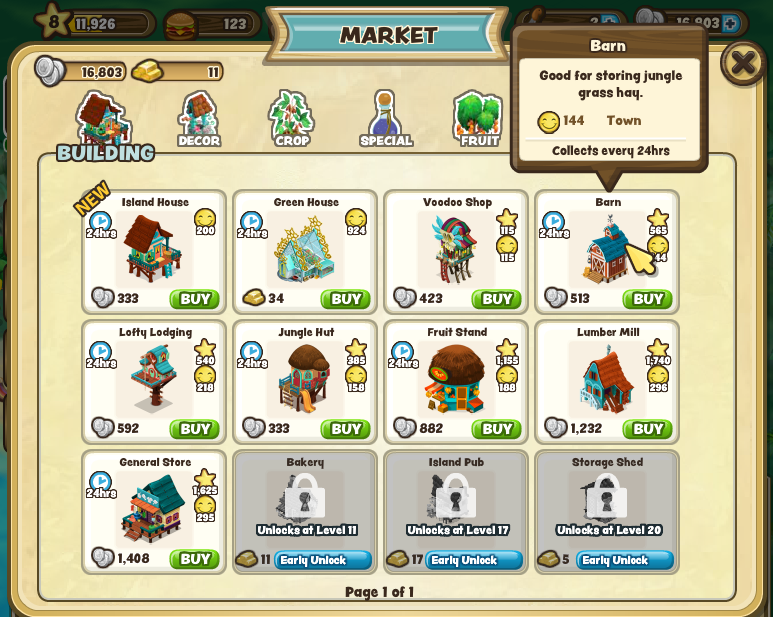
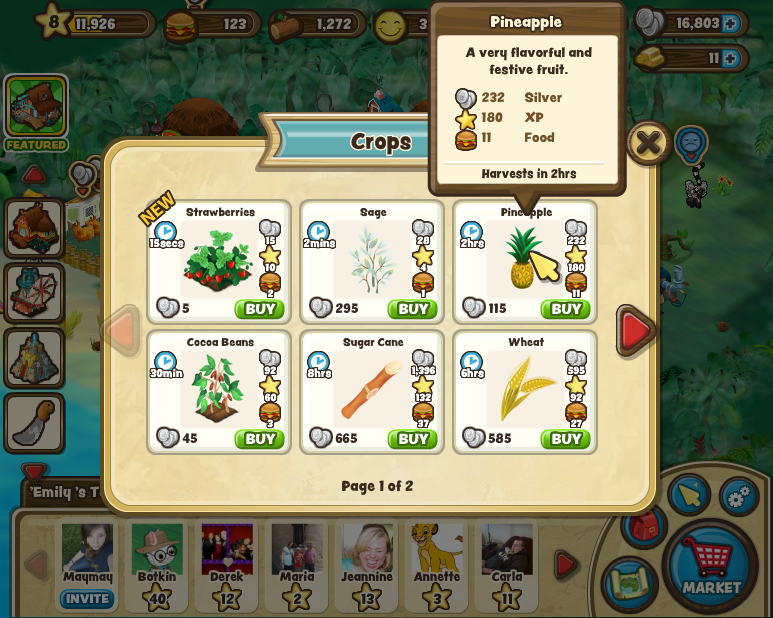
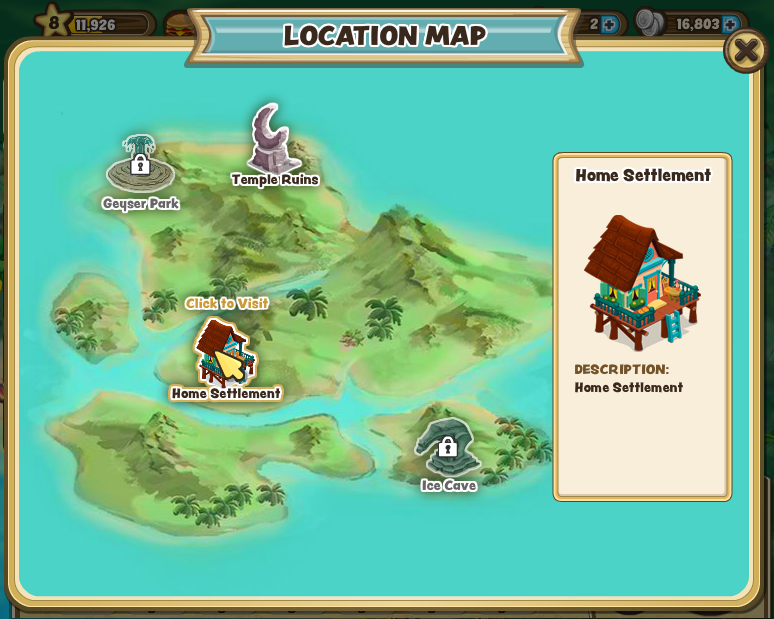
The initial version of Hidden Cove needed to establish a tropical adventure aesthetic distinct from Gnome Town while still feeling like the same family of games. Every screen — from the main island view to quests, the market, and farming mechanics — had to communicate warmth, discovery, and the sense that there was always more to explore.
A game within a game — designing the hidden object experience.
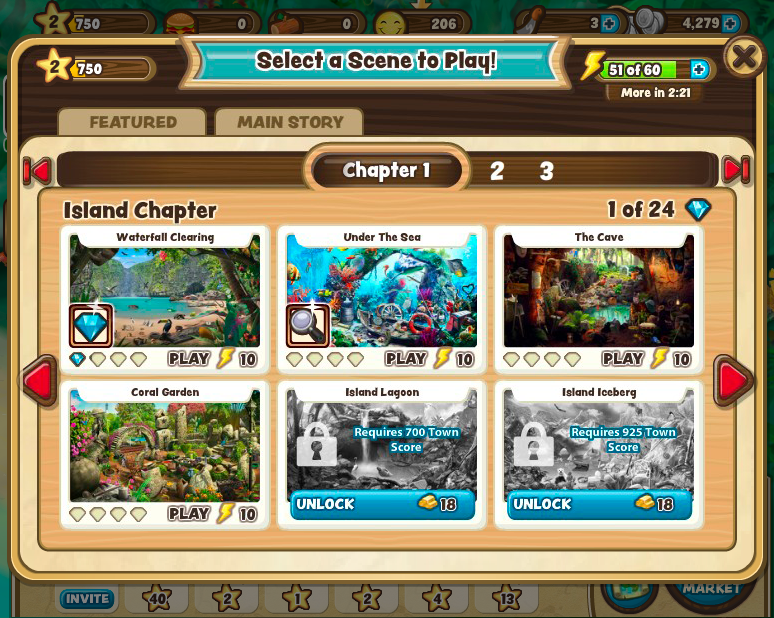
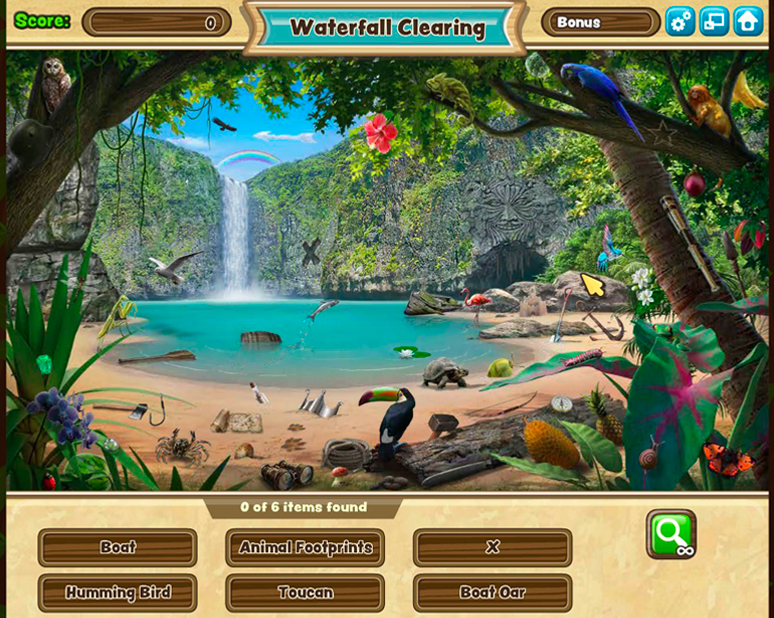
The hidden object mini-game was one of Hidden Cove's defining features in its original form. Players would enter special scenes to search for objects, earning rewards that fed back into the main builder loop. I designed the HOG menu, scene selection, and the in-game interface — balancing the playfulness of the aesthetic with the clarity needed for this type of puzzle gameplay.
Hidden Cove taught me what it means to design under real uncertainty. The game changed direction multiple times in less than a year, and each pivot meant redesigning core systems while keeping players engaged. It was a crash course in adaptability — learning to build design systems flexible enough to survive a product that didn't yet know what it wanted to be.